Xiamen Tmax Battery Equipments Limited was set up as a manufacturer in 1995, dealing with Laboratory equipments, technology, etc. We have total manufacturing facilities of around 2, 000 square meters and more than 100 staff. Owning a group of experie-nced engineers and staffs, we can bring you not only reliable products and technology, but also excellent services and real value you will expect and enjoy.
Microwave Pyrolysis Furnace: Innovative Thermal Conversion Technology for High-Value Material Recovery
A Microwave Pyrolysis Furnace is a highly advanced thermal conversion system that uses microwave energy to decompose organic materials under oxygen-limited or inert conditions. Unlike traditional pyrolysis methods relying on external heating from electric or gas-fired furnaces, microwave pyrolysis introduces energy directly into the material through electromagnetic wave absorption. This results in rapid, uniform, and efficient heating, making the technology increasingly adopted in solid waste treatment, renewable energy production, chemical feedstock recovery, and advanced material research.
The fundamental principle of microwave pyrolysis lies in the interaction between microwave radiation and dielectric materials. When exposed to microwaves, polar molecules within the feedstock rotate rapidly, generating heat internally through dielectric loss. This volumetric heating model allows the material to reach pyrolysis temperatures faster than with conventional heat conduction, significantly improving reaction kinetics. As a result, microwave pyrolysis furnaces are capable of achieving high heating rates, reduced residence time, and enhanced product selectivity.
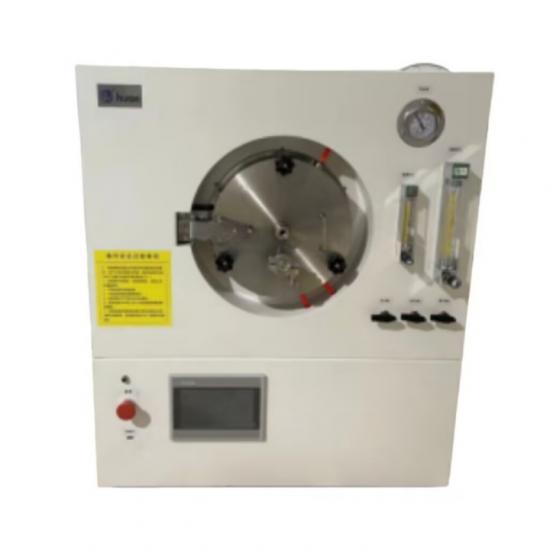
A typical microwave pyrolysis furnace consists of several key subsystems: a microwave generator (magnetron or solid-state), a waveguide for directing microwave energy, a high-temperature pyrolysis chamber, an atmosphere control system, and a product collection unit for gases, liquids, and solid residues. The chamber is usually lined with microwave-transparent yet thermally insulating materials to maintain stable operating temperatures. In addition, specially designed susceptors—such as silicon carbide or activated carbon—may be used to initiate heating for materials with low microwave absorptivity.
One key advantage of a microwave pyrolysis furnace is its superior energy efficiency. Because microwave energy is absorbed by the material directly, energy losses to the surrounding environment are greatly reduced. Studies have shown that microwave pyrolysis can consume 30–50% less energy compared with traditional heating. Moreover, the uniformity of volumetric heating minimizes temperature gradients, preventing thermal cracking or incomplete decomposition. This results in more consistent product quality, making the system suitable for sensitive feedstocks such as biomass, polymers, and hazardous wastes.
Microwave pyrolysis furnaces are widely used for converting biomass—such as agricultural waste, wood chips, and algae—into biochar, syngas, and bio-oil. The process enhances carbon yield and porous structure formation in biochar, making it suitable for applications in soil improvement, adsorption materials, and activated carbon production. For plastic waste, microwave pyrolysis enables clean depolymerization, producing high-value hydrocarbons and minimizing toxic by-products. The technology is also effective for processing electronic waste, rubber, sewage sludge, and industrial residues, offering an environmentally friendly pathway for resource recovery.
Tubular Crucible Furnace
In the chemical industry, microwave pyrolysis is becoming an important tool for synthesizing advanced materials. It supports rapid production of graphene, carbon nanotubes, metal oxides, and catalytic materials through controlled decomposition and microstructure tuning. The precise control of heating profiles allows researchers and manufacturers to tailor product characteristics with exceptional reliability.
Modern microwave pyrolysis furnaces integrate fully automated process control systems, including programmable logic controllers (PLC), infrared temperature sensors, and continuous monitoring of gas flow and pressure. Advanced units feature hybrid heating, combining microwave and conventional heating elements to extend the maximum operating temperature beyond 1200 °C and accommodate more diverse feedstocks. Safety mechanisms—such as interlock systems, gas leakage alarms, and microwave shielding—ensure stable, secure operation even under demanding industrial conditions.
Environmentally, microwave pyrolysis offers significant benefits by reducing emissions and enabling cleaner thermal reactions. The absence of direct combustion lowers the formation of NOx, SOx, and dioxins. Additionally, the system promotes the circular economy concept by transforming waste materials into valuable resources.
In summary, the Microwave Pyrolysis Furnace represents a cutting-edge solution for sustainable thermal conversion, offering fast heating, high energy efficiency, precise control, and versatile applications. Its growing adoption in renewable energy, waste treatment, and materials engineering highlights its importance in modern industrial and environmental technologies.