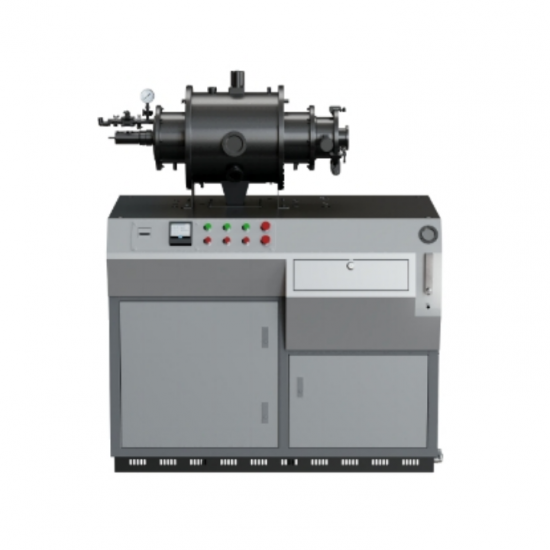
Xiamen Tmax Battery Equipments Limited was set up as a manufacturer in 1995, dealing with Laboratory equipments, technology, etc. We have total manufacturing facilities of around 2, 000 square meters and more than 100 staff. Owning a group of experie-nced engineers and staffs, we can bring you not only reliable products and technology, but also excellent services and real value you will expect and enjoy.
Microwave Rotary Furnacee: Advanced Continuous Thermal Processing for HighPerformance Materials
A Microwave rotary furnacee is an advanced thermal processing system that combines microwave heating technology with a rotating cylindrical chamber to achieve highly uniform, efficient, and continuous treatment of powders, granules, and bulk materials. This type of furnace is widely used in chemical engineering, metallurgy, energy materials, environmental processing, and advanced ceramics due to its superior heating performance and precise process control. As industries increasingly require faster production cycles, improved material properties, and energyefficient equipment, the microwave rotary furnacee has become an indispensable solution for modern manufacturing and laboratory research.
1. Working Principle of Microwave Rotary Furnacee
The microwave rotary furnacee operates by delivering microwave electromagnetic waves directly into a rotating, thermally insulated chamber. Microwave energy interacts with dielectric materials, causing polar molecules and ions to oscillate rapidly. This generates heat internally within the material, unlike conventional furnaces that rely solely on external heating.
The rotating cylinder plays a key role in ensuring uniform treatment:
* It continuously tumbles the material.
* It prevents localized overheating or “hot spots.”
* It guarantees uniform exposure to microwave fields.
Combined with the material’s internal heating response, the rotation significantly improves temperature consistency and reaction uniformity.
Core components typically include:
* Microwave generators (magnetron or solidstate)
* Stainless steel or alumina rotary tube
* Motordriven rotation mechanism
* Waveguides for even microwave distribution
* Temperature and power control units
* Gas inlet/outlet system for atmosphere adjustment
This integration enables precise thermal processing under a wide range of atmospheric conditions, including inert, reducing, oxidizing, or vacuum environments.
2. Engineering Features and Advantages
Efficient Continuous Processing
The rotary structure enables uninterrupted feeding and discharge. Materials pass through the heating zone at a controlled rate, making the microwave rotary furnacee ideal for medium to largescale industrial production.
Rapid and Volumetric Heating
Microwave energy penetrates the material, producing heat from the inside out. This accelerates temperature rise and significantly shortens processing times.
Superior Heating Uniformity
Rotation ensures all particles are evenly heated, which is critical for powders and granules that tend to agglomerate in static furnaces.
Reduced Energy Consumption
Because microwaves directly heat the product rather than the furnace chamber, overall energy usage is often reduced by 30–70% compared with conventional rotary furnaces.
Atmosphere Flexibility
The furnace supports a wide range of atmospheres, making it suitable for:
* Oxidation reactions
* Reduction processes
* Pyrolysis and devolatilization
* Calcination under inert gases
This flexibility expands the furnace’s application range.
Lower Processing Temperature
Microwaveenhanced reaction kinetics allow some materials to achieve the same level of sintering or decomposition at markedly lower temperatures, improving efficiency and material quality.
Full Automation and Smart Control
Modern microwave rotary furnacee systems include:
* PLC control
* Digital temperature monitoring
* Variable rotation speed adjustment
* Realtime power feedback
* Safety interlocks
These features ensure process stability and reproducibility.
3. Industrial Applications of Microwave Rotary Furnacee
Because of its unique combination of microwaves and continuous rotation, the microwave rotary furnacee is suitable for a wide array of industrial and research applications.
Chemical Materials
Ideal for:
* Catalyst calcination
* Chemical powder activation
* Preparation of metal oxides
* Controlled decomposition reactions
Microwave heating improves reaction uniformity and strengthens crystalline structure.
Powder Metallurgy
Used for:
* Sintering metal powders
* Preheating and reduction processes
* Controlled atmosphere heat treatment
The rotating tube prevents particle sintering together and ensures consistent thermal exposure.
Ceramics and Advanced Inorganics
Sintering Tube Furnace
Applications include:
* Calcination of ceramic powders
* Firing of composite materials
* Pretreatment of ceramic precursors
The furnace significantly shortens processing time while improving grain uniformity.
Energy Storage and Battery Materials
Increasingly used in:
* Production of cathode and anode powders
* Calcination of lithium, sodium, and solidstate electrolyte materials
* Carbonization of carbonbased materials
The uniform heating offered by the microwave rotary furnacee enhances electrochemical performance and consistency.
Environmental and Waste Treatment
Microwave rotary furnaces are highly effective for:
* Pyrolysis of biomass
* Sludge drying and carbonization
* Wastetofuel conversion
* Treatment of hazardous materials
The rapid internal heating accelerates organic decomposition and minimizes emissions.
4. Custom Configurations and Design Options
Manufacturers typically offer various customization options to match specific processing requirements:
Rotary Tube Materials
* Stainless steel
* Quartz
* Alumina
* Silicon carbide
Heating Zones
Systems can include multiple microwave zones for staged heating.
Rotation Speed Control
Variable RPM ensures optimal mixing and heat distribution.
Integrated Gas Flow Systems
Massflow controllers allow precise control of atmospheric composition.
Power and Frequency Adjustment
Customizable microwave frequencies (915 MHz or 2.45 GHz) optimize penetration depth and heating behavior.
Feeding and Discharging Systems
Options include screw feeders, vibratory feeders, and automatic collection chambers.
5. Conclusion
The Microwave rotary furnacee represents a major advancement in continuous thermal processing, offering unparalleled heating speed, uniformity, and efficiency. By combining volumetric microwave heating with constant rotary motion, this equipment enables superior material quality, reduced energy consumption, and faster production cycles. Whether used in chemical engineering, powder metallurgy, advanced ceramics, or energy materials, the microwave rotary furnacee provides reliable, scalable, and futureoriented thermal processing capabilities for modern industry.